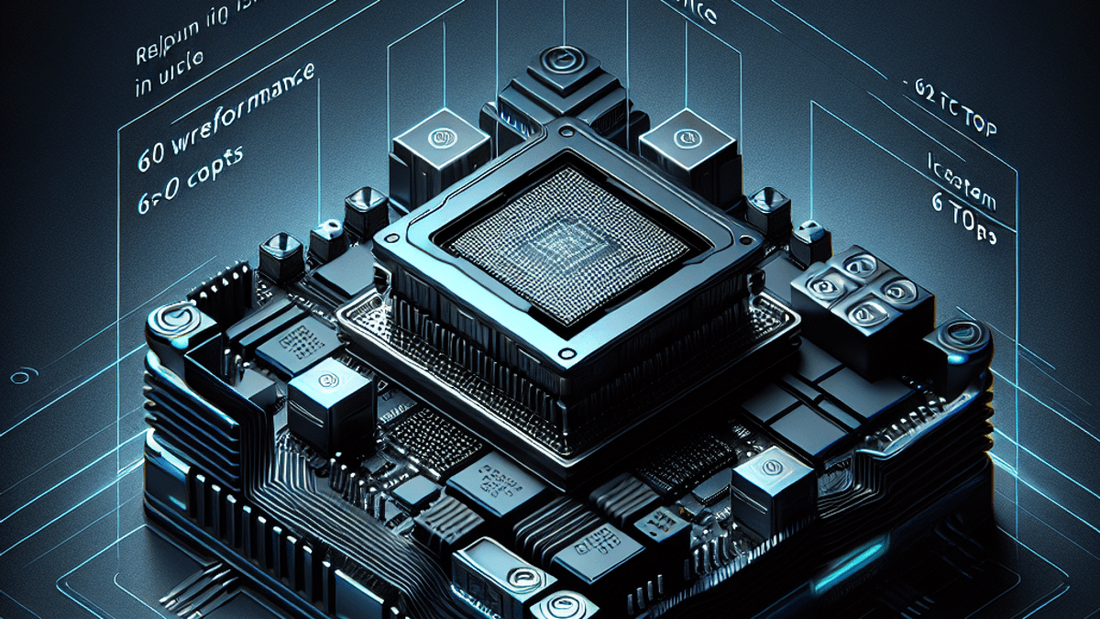
More compute in a smaller thermal envelope
NVIDIA’s GTC Fall update revealed Orin Next, a robotics module with 600 TOPS of INT8 performance at 60 watts. Source The system-on-module includes a 12-core Grace CPU cluster, next-gen Tensor Cores, and LPDDR6 memory with ECC. NVIDIA claims the design delivers 45% more performance per watt than its current Orin NX modules, enabling denser robot fleets in logistics centers and manufacturing floors.
The module integrates with NVIDIA’s Isaac Robotics stack and ships with pre-trained perception models for pallet detection, safety zoning, and worker gesture recognition. Those models can be fine-tuned using the company’s synthetic data tools we covered in our Synthetic Data Studio breakdown. Learn how teams train safely
Safety and compliance baked into the stack
NVIDIA is partnering with TÜV SÜD to certify Orin Next reference designs for ISO 13849 safety categories. Source The company also released a safety microservice that monitors braking thresholds and sends alerts to plant SCADA systems when robots approach risk limits. Integration guides for Siemens and Rockwell automation environments are available today.
Security remains a top concern for industrial buyers. NVIDIA says Orin Next includes a hardware root of trust and supports remote attestation with NVIDIA Fleet Command. That lines up with the controls we discussed in our zero-trust manufacturing primer. Revisit zero-trust strategies
What automation leads should plan
Operations teams should map current robot SKUs to Orin Next’s thermal and power requirements, paying attention to enclosures that may need upgraded cooling. Software engineers should test Isaac workflows with existing data pipelines and document how synthetic data blends with real sensor logs. Finally, coordinate with safety and security partners to validate the TÜV certifications against local regulations and ensure Fleet Command integrates with enterprise IAM policies. Review automation suite guidance