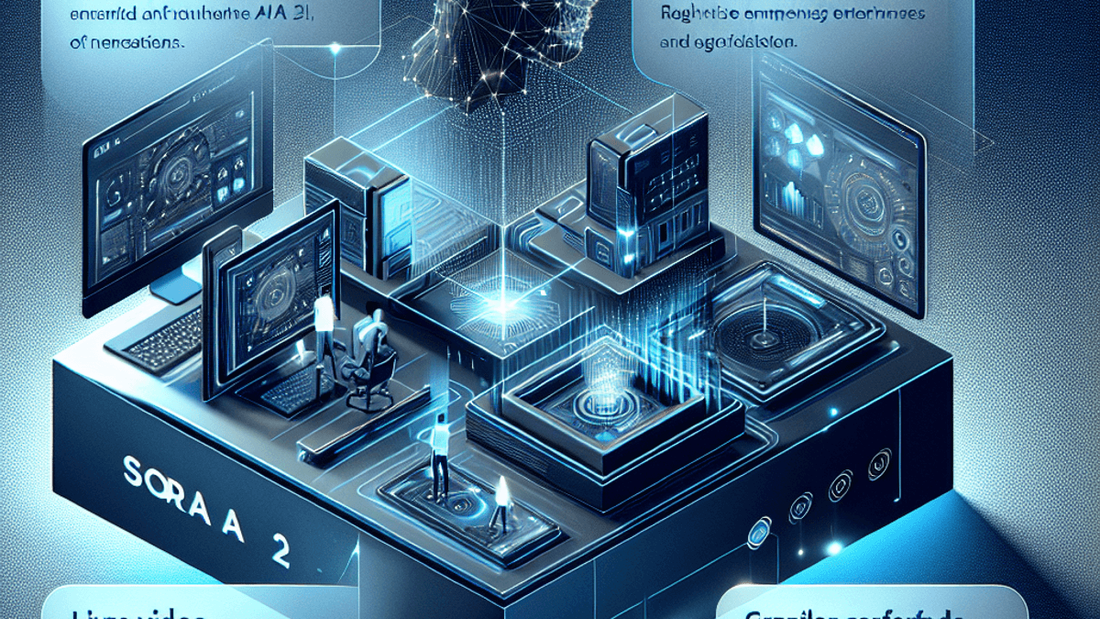
Sora 2 pushes OpenAI's text-to-video research into live production, promising broadcast-ready renders, frame-accurate controls, and safer deployment pathways for brands.
OpenAI introduced Sora 2 today, a major update to its text-to-video generator that now delivers real-time rendering, 4K output, and fine-grained prompt controls aimed at professional storytellers. The release arrives less than a year after the first Sora preview and positions OpenAI as a direct challenger to incumbent virtual production stacks from Adobe, Runway, and emerging enterprise studios.
During a virtual launch streamed from the company's San Francisco headquarters, product leads highlighted a redesigned Sora Studio interface that lets editors scrub, trim, and restage footage while the model streams fresh frames in under a second. OpenAI says the new runtime was rebuilt on the same accelerated inference infrastructure behind GPT-4o, giving teams the responsiveness they expect from traditional non-linear editing suites.
For creators, Sora 2's timeline is supported by prompt layers that separate background, subject, motion, and style instructions so teams can iterate without rewriting full scripts. That modularity echoes the composable workflows we map out in our AI for Productivity playbook and should reduce the back-and-forth between directors, VFX leads, and marketing stakeholders.
OpenAI also detailed new Control Nodes that allow production teams to anchor shots to imported storyboards or volumetric captures. The nodes integrate with Unreal Engine sequences and with automation pipelines similar to those we reviewed in the Automation Suite review, giving post-production crews more predictable outputs when they hand off assets to agencies or internal brand studios.
New creative stack arrives with enterprise-first tooling
Sora 2 ships with a dual-mode workflow: a simplified storyboard wizard for quick marketing loops and a pro console that exposes the full prompt graph. Beta testers told The AMA Hub that the pro console already rivals legacy previs tools thanks to live camera path adjustments and an expanded library of physics-aware presets.
- Scene memory. Teams can lock key frames, environments, and character poses so Sora 2 regenerates the same look during alternate takes.
- Audio-reactive cues. Editors can import voiceover or soundtrack stems; the model syncs motion beats to match narration, a feature geared toward corporate explainers and product demos.
- Team workspaces. Shared workboards let legal, security, and marketing reviewers leave inline comments before renders are exported to DAM systems.
The company is also opening an SDK for agencies that want to embed Sora 2 inside custom workflow dashboards. Early partners include major streaming platforms, newsrooms experimenting with automated B-roll, and consumer brands building interactive product walk-throughs that complement initiatives like our Storytelling with Data framework.
Safety guardrails and compliance take center stage
OpenAI framed Sora 2 as its most safety-conscious media release to date. Every render now passes through a provenance pipeline that watermark frames at the pixel level and tracks prompt history, which should help compliance leaders who follow our AI supply chain audit checklist. The dashboard surfaces content ratings, geographic restrictions, and usage analytics so teams can enforce playbooks similar to our cybersecurity best practices guidance.
On the policy front, OpenAI published updated red-teaming disclosures, citing partnerships with broadcasters, accessibility experts, and civil society groups. The company also reaffirmed commitments to the safeguards outlined in our AI ethics in practice explainer, including automatic detection of public figures, granular control over deepfake risk thresholds, and audit logs that meet SOC 2 and ISO 27001 requirements.
Pricing starts at $30 per seat each month for the storyboard tier, while enterprise contracts bundle Sora 2 credits with GPT-4o and Whisper usage. OpenAI is courting media conglomerates by offering dedicated regional inference clusters, which the company claims reduce latency spikes by 45 percent compared with first-generation Sora deployments.
What operations teams should do now
Creative leads evaluating Sora 2 should begin with a controlled pilot that mirrors their highest-risk use cases. Start by documenting current review workflows, then map Sora 2 checkpoints—content approvals, rights management, and security signatures—into an automation backbone guided by our MLOps fundamentals manual.
- Coordinate with legal, HR, and data governance partners to codify acceptable content policies before provisioning access.
- Instrument the API endpoints with observability tooling so telemetry flows into the same dashboards tracking GPT deployments referenced in our prior GPT-5 coverage.
- Develop a communications plan for talent and customers that explains where Sora-generated footage augments, not replaces, human work.
OpenAI says general availability will roll out in waves over the next 60 days, prioritizing customers already building automation roadmaps like the ones we profile in Automation Suite review. Teams that want to stay ahead of roadmap updates and partner integrations can follow our ongoing coverage, where we'll unpack hands-on lessons as the rollout expands.
The bigger question is whether Sora 2's blend of creative agility and compliance rigor can convince brand leaders that generative video is ready for prime time—or if they'll wait for even tighter guarantees before reshaping their production playbooks.
Share on TwitterShare on LinkedInShare on FacebookShare on Reddit