Black Friday 2025: The First AI-Native Shopping Day
Adobe Analytics logged $11.8 billion in online revenue on Black Friday 2025, a 9.1% jump over last year and the largest single-day e-commerce haul in U.S. history. Two dynamics powered the spike:
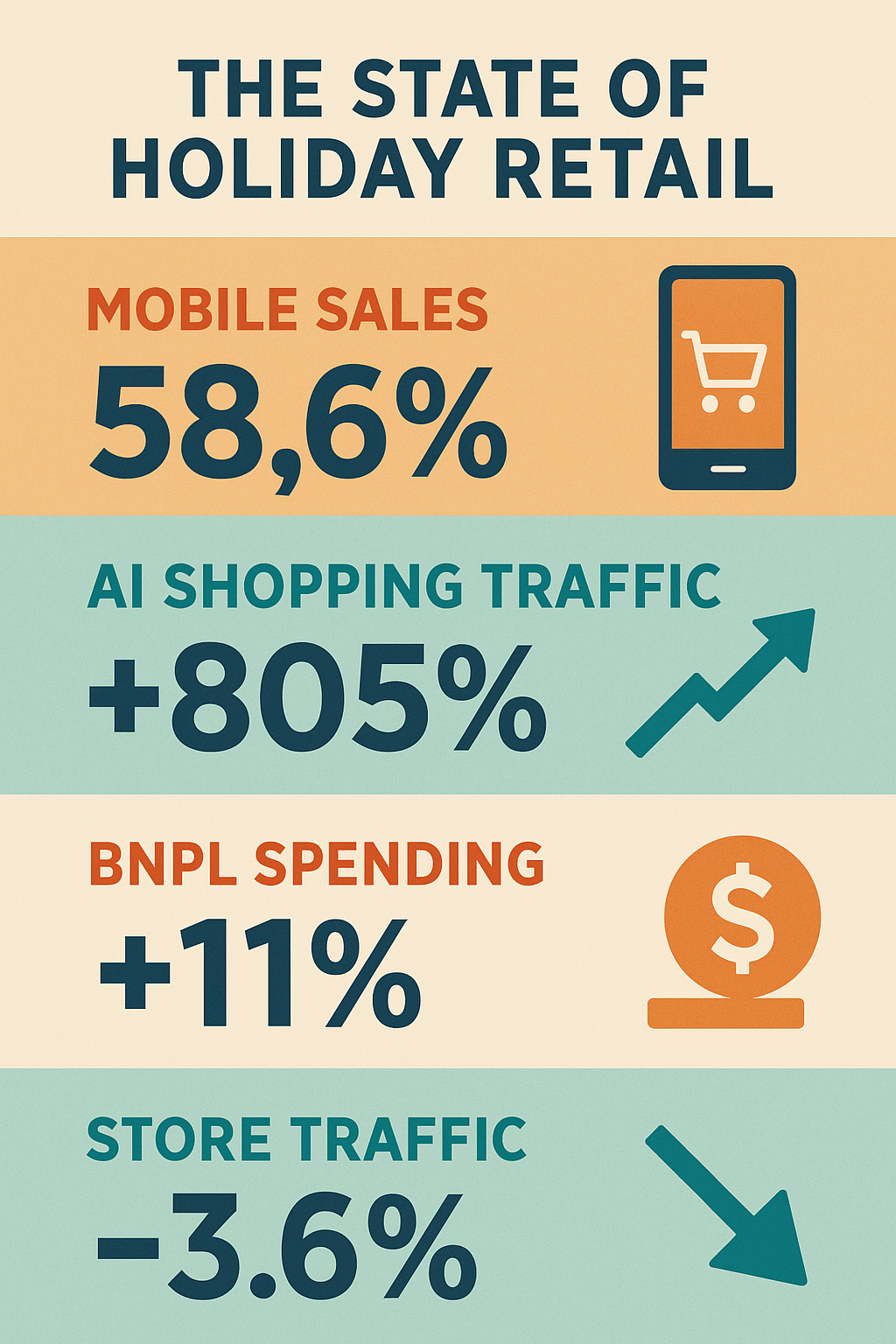
- AI-assisted shopping exploded. Adobe tracked an 805% surge in AI-coached sessions as shoppers delegated deal discovery, price tracking, and even checkout to copilots.
- Mobile became the default. Smartphones generated 58.6% of all digital revenue—roughly $5.1B—thanks to one-tap wallets, faster retail apps, and personalized notifications.
Meanwhile RetailNext measured a 3.6% decline in physical store traffic, underscoring how far the holiday center of gravity has shifted online.
Translation: algorithms, not endcaps, now guide the average Black Friday journey.
Complete Data Breakdown
| Metric | 2024 | 2025 | Change |
|---|---|---|---|
| Online spending (Adobe) | $10.82B | $11.8B | +9.1% |
| Mobile share of sales | 54% | 58.6% | +4.6 pts |
| AI-assisted visits | Baseline | 805% increase | Breakout year |
| Store foot traffic (RetailNext) | -2.8% | -3.6% | Decline accelerated |
| BNPL spending | $686M | $761.8M | +11% |
AI Is Now the Default Shopping Interface
Consumers relied on AI to research products, compare retailers, plan gifting budgets, summarize reviews, and auto-complete carts. The discovery-to-decision funnel collapsed from minutes to seconds. If your product feed is messy, out-of-date, or lacks structured metadata, AI engines simply skip you—making product data the new storefront.
Mobile Became the Commerce Device
Phones no longer support desktop funnels—they are the funnel. Wallet autofill, SMS price nudges, live inventory APIs, and ubiquitous 5G removed friction for impulse buys. Retailers that tuned image weight, Core Web Vitals, and personalized push flows saw outsized conversion gains.
Physical Stores Lost Another Step
Store visits slipped again, but the channel still matters. Operators reframed locations as pickup hubs, return depots, and demo floors while issuing mobile-only incentives to blend online browsing with curbside fulfillment. Brands that sync pricing between channels avoided shopper backlash.
BNPL Spiked as Budgets Tightened
Buy-now-pay-later transactions climbed 11% to $761.8M on Black Friday alone. With prices up ~7% year over year, households bought fewer items per order but spent more overall, leaning on financing even for mid-tier purchases. Expect BNPL risk teams to scrutinize December softness in unit volume.
What Happens Next
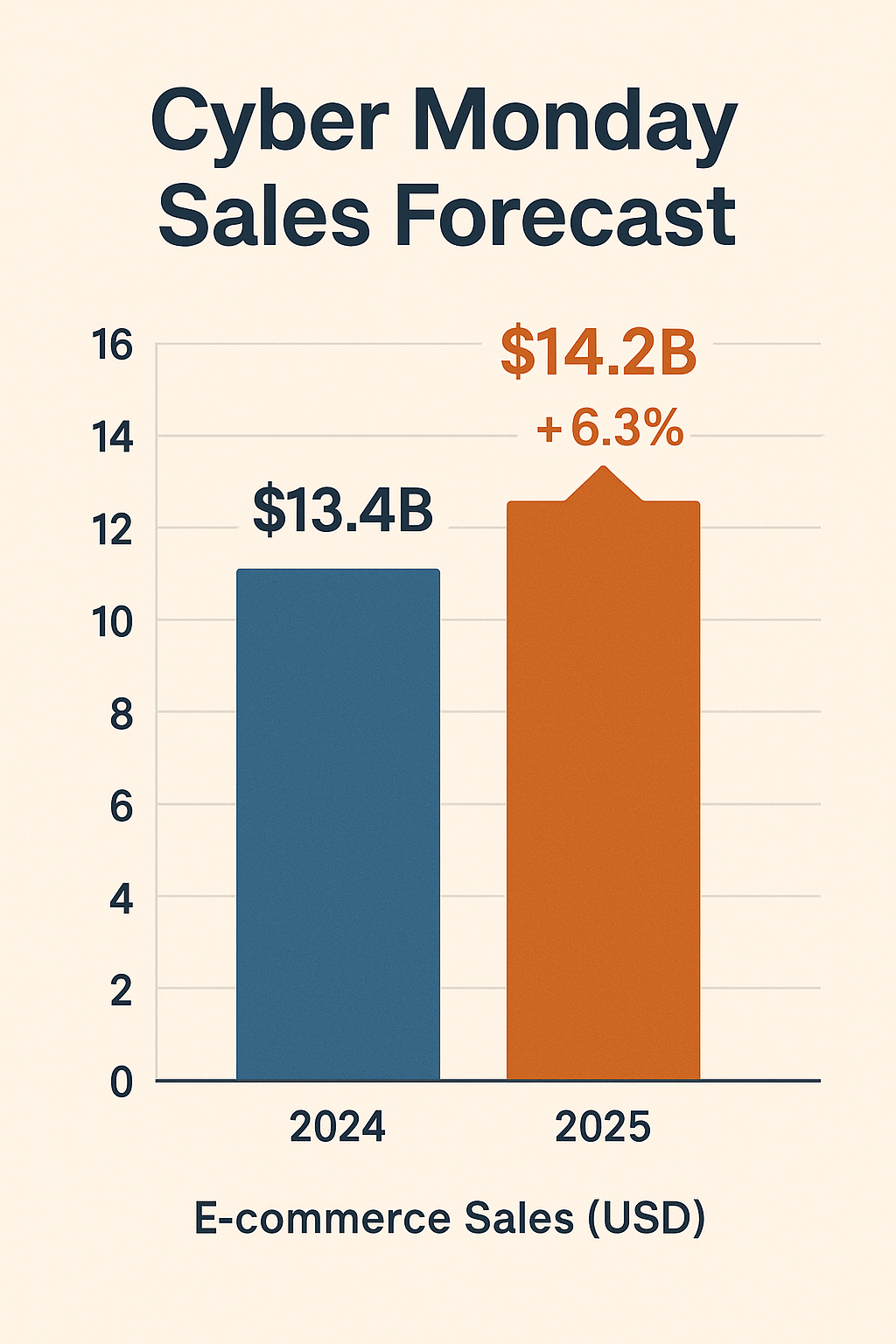
- Immediate: Stress-test mobile checkout, loyalty logins, and BNPL partners ahead of a projected $14.2B Cyber Monday.
- 30-day checkpoint: Audit AI merchandising logs, agent traffic, and fulfillment SLAs to see which promos earned repeat baskets.
- Season outlook: NRF still expects total holiday spend to top $1T, but growth cools to ~3.7–4.2% as inflation suppresses unit counts.
Market Impact
- AI discovery replaces search. Algorithm visibility now matters more than homepage placement.
- Checkout optimization > traffic acquisition. Mobile abandonment is the biggest revenue leak left.
- BNPL sensitivity rises. Higher ASPs plus fewer orders put December comps at risk if delinquency ticks up.
Visuals