Apple previews next-gen Vision Pro hardware
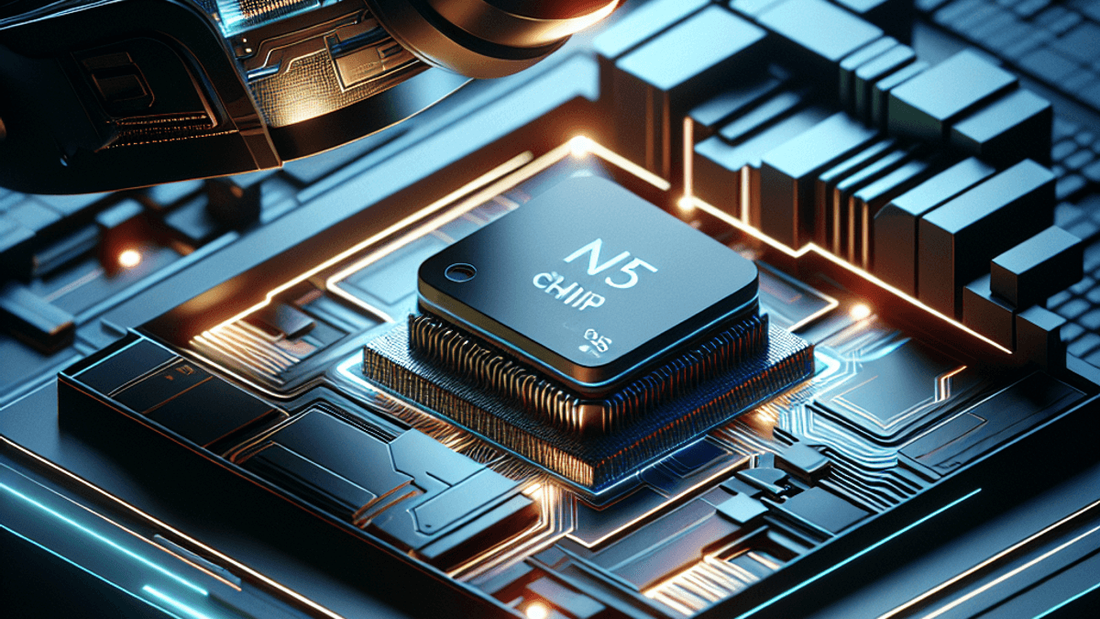
During its October event, Apple offered a rare tease of the next Vision Pro headset, confirming it will be powered by a custom M5 chip that dramatically improves power efficiency compared with the current M2/R1 tandem. Source According to Apple SVP Mike Rockwell, the M5 enables a 35 percent reduction in overall thermal load, allowing the company to shrink the head-mounted display by 12 percent and lighten it by 90 grams. Source The SoC integrates a new sensor fusion engine that consolidates data from cameras, LiDAR, and eye-tracking into a single on-device neural processor for lower latency. Source
Apple also announced a second-generation battery pack rated for three hours of mixed-use and up to four hours of video playback, thanks to higher energy density cells and adaptive refresh technology in the micro-OLED displays. Source The headset will support Wi-Fi 7 and 60 GHz wireless for Mac mirroring with lower latency than the current model.
Spatial computing software upgrades
visionOS 2.5 will ship alongside Vision Pro 2, adding Shared Spaces so multiple users can co-edit the same 3D environment in real time. Source Apple says its new SceneKit Fusion framework makes it easier for developers to port immersive apps from Unity or Unreal with less custom code. Source The company is expanding enterprise pilots for remote engineering reviews and surgical planning, offering specialized support teams in North America and Europe. Source
For creators, Final Cut Pro for visionOS will render multi-angle timelines faster on the M5 chip, while Logic Pro adds a spatial audio monitor that simulates AirPods Max playback. Source Apple also teased deeper integration with the M5 iPad Pro, enabling direct Spatial Video imports without transcoding. Source
How Vision Pro 2 fits into Apple’s ecosystem
The M5 chip alignment across MacBook Pro, iPad Pro, and Vision Pro 2 underscores Apple’s push for unified AI acceleration. Developers can now build once for the M5 architecture and deploy across form factors using Universal App binaries. Source The company highlighted workflows where a MacBook Pro handles code compilation, the iPad Pro captures Spatial Video, and Vision Pro 2 provides immersive previews.
To see how the M5 MacBook Pro sets the stage, review our launch coverage of the 14-inch model. Get the MacBook details For a breakdown of how Apple differentiates the M5 tablet, read our report on the iPad Pro announcement. Catch up on the M5 iPad Pro And for practical advice on building AI-ready workflows that span Apple devices, explore our M5 MacBook Pro upgrade guide. Weigh your MacBook upgrade options
What to expect next
Apple plans to open developer labs for Vision Pro 2 in December, with hardware shipping to early adopters in Q1 2026. Source Pricing has not been finalized, but analysts expect Apple to stay near the $3,499 entry point while offering enterprise bundles with extended support. Source Trade-in programs for first-generation Vision Pro units will roll out alongside the launch window, with Apple promising competitive valuations to encourage upgrades. Source
The company will share more details at its January developer briefing, where it’s rumored to showcase new spatial collaboration tools. Source In the meantime, stay up to speed with our ongoing coverage of spatial computing innovations. Revisit our Vision Pro 2 review Keep tabs on the broader AI ecosystem impacts through our automation analysis. See how automation tools evolve And for a forward-looking view on Apple’s AI ambitions, don’t miss our overview of the company’s machine learning roadmap. Understand Apple’s AI strategy
With an M5 chip at its core, Vision Pro 2 is poised to make Apple’s spatial computing ambitions more comfortable, longer-lasting, and tightly integrated across the company’s pro hardware lineup.